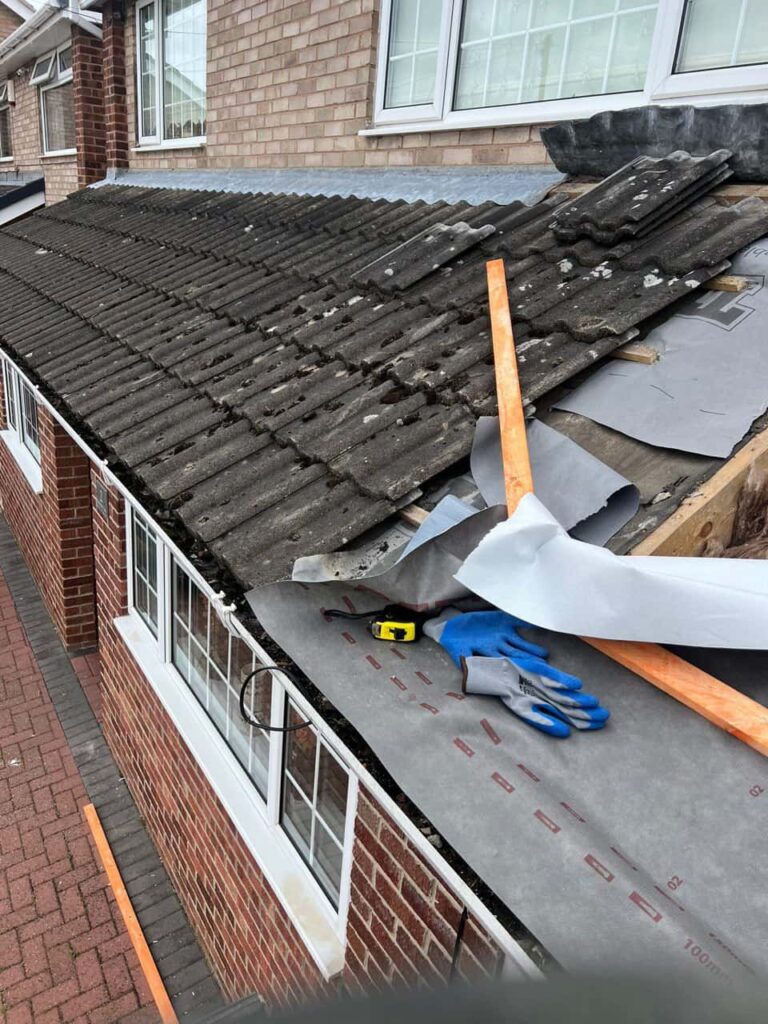
A roof that has leaked more than once can understandably raise concerns about its long-term reliability. If damp patches keep appearing or different areas have needed attention over the years, it is easy to assume that the roof can no longer provide dependable protection. However, a history of leaks does not automatically mean that a roof has reached the end of its useful life.
In many cases, reliability can be restored when the actual causes of previous and current leaks are properly identified. The important distinction is whether the leaks have resulted from isolated defects or whether they are symptoms of more widespread deterioration.
For property owners in Wigston, Nottinghamshire, a detailed assessment of the roof can establish whether targeted repairs remain appropriate and what needs to be addressed to reduce the likelihood of further water ingress.
What Determines Whether a Previously Leaking Roof Can Be Made Reliable?
The number of previous leaks is only one part of the assessment. A roof may have experienced several unrelated defects over a long period while still remaining generally sound. Alternatively, repeated leaks concentrated around the same section can indicate an unresolved underlying weakness.
A professional assessment should consider factors such as:
- Where previous leaks have occurred
- Whether they repeatedly affect the same section
- The condition of tiles, slates or other roof coverings
- The condition of flashing and roof junctions
- Whether roofing materials have moved or deteriorated
- The condition of the supporting materials beneath the covering
- Whether previous repairs remain sound
- Whether water ingress is localised or occurring across several areas
Understanding this wider picture is essential before deciding how reliable the roof can be made through further repair.
A History of Leaks Does Not Necessarily Mean the Roof Has Failed
Leaks can develop for many different reasons.
A cracked tile, displaced slate, damaged flashing or localised defect can allow water into an otherwise serviceable roof. If each problem has a clear cause and the surrounding materials remain sound, repairing the affected area can restore effective protection.
This is very different from a roof where deterioration is occurring across numerous sections.
The repair history therefore needs context. Several isolated problems over many years do not necessarily indicate the same level of concern as repeated water ingress caused by widespread deterioration.
Finding the True Source of Water Ingress Is Essential
One of the challenges with roof leaks is that the visible internal symptom does not always identify the location of the external defect.
Water can enter through a small opening and travel along battens, underlay or other roofing components before becoming visible inside the property. The damp patch on a ceiling may therefore appear some distance away from the point where rainwater originally entered.
This is one reason leaks can appear to return after repair.
If only the most obvious area is treated without identifying the actual route of water ingress, the underlying problem can remain. Careful investigation is therefore central to restoring reliability.
Recurring Leaks in the Same Area Need Closer Investigation
When water repeatedly appears in the same part of a property, there may be more happening than a simple surface defect.
Roof junctions, flashing, valleys and other detailed areas can contain several interacting components. A weakness in one part may affect the performance of the complete section.
Repeatedly applying minor repairs without assessing surrounding materials may temporarily reduce the symptoms without resolving the underlying cause.
A broader inspection of the affected section can determine whether the problem is a single repairable defect or whether several components need attention to restore dependable performance.
Leaks in Different Areas Can Reveal the Roof’s Wider Condition
A different concern arises when leaks begin appearing in unrelated parts of the roof.
Each defect may still have a separate cause, but an increasing number of problems can indicate that roofing materials are deteriorating more generally.
This is particularly relevant when leaks are accompanied by other symptoms, such as repeatedly slipped tiles, damaged roof coverings or deteriorating roof details.
At this stage, assessing the complete roof becomes more useful than viewing every new leak independently. The objective is to determine whether local repairs are still improving overall reliability or simply responding to the next weak point.
Previous Roof Repairs Should Be Assessed, Not Automatically Blamed
The presence of previous repairs does not mean those repairs have failed.
A properly completed repair can remain secure while another part of the roof later develops an unrelated problem. In fact, previously repaired areas may continue performing effectively long after surrounding materials have begun to deteriorate.
During an inspection, previous work can provide useful information about the history of the roof.
Checking whether those areas remain sound helps establish whether current water ingress is connected to an old problem or has developed from a completely different source.
The Condition Beneath the Roof Covering Matters
Tiles and slates are the most visible parts of many roofs, but they are not the only components that influence reliability.
Battens, underlay and other supporting elements can affect how well the roofing system performs. If water has been entering for an extended period, these materials may need to be inspected alongside the visible covering.
Replacing a damaged tile may be sufficient when everything beneath it remains sound. Where underlying materials have deteriorated, simply repairing the surface may not fully address the condition of the affected section.
A reliable repair therefore needs to consider what is happening both above and beneath the visible roof covering.
Why the Pattern of Leaks Matters More Than the Number
There is no particular number of leaks that automatically determines whether a roof remains repairable.
The pattern provides much more useful information.
A roof that experienced three unrelated leaks over a long period may be in considerably better condition than one that has developed repeated water ingress around the same junction within a much shorter timeframe.
Similarly, a roof where each repair has remained successful should be viewed differently from one where problems repeatedly return shortly after work has been completed.
Looking at frequency, location and cause helps build a more accurate picture of overall roof reliability.
When Targeted Roof Repairs Can Restore Reliability
Localised repairs can remain highly effective when the wider roof is structurally and materially sound.
Once the source of the leak has been identified, the relevant damaged or displaced components can be addressed and surrounding materials checked.
This approach is particularly suitable where the defect has a defined cause and there is no evidence of extensive deterioration elsewhere.
The purpose of a targeted repair should be to restore the affected section as part of the complete roofing system, rather than simply preventing water from appearing temporarily.
When a Wider Roofing Solution May Need Consideration
There can be a point where individual repairs provide progressively less improvement.
If different sections continue failing, materials are deteriorating extensively or the intervals between leaks are becoming shorter, the overall roof condition deserves closer consideration.
This does not mean that every roof with recurring leaks automatically requires replacement. It means that another isolated repair should not be recommended without first understanding the wider condition.
A professional inspection can establish whether serviceable sections can continue to be retained or whether deterioration has become too widespread for small repairs to provide dependable results.
Why Roof Reliability Should Be Judged After Proper Assessment
From inside a property, recurring leaks can make a roof seem far worse than it actually is. Conversely, a roof may look reasonably intact from ground level while concealed defects continue allowing moisture through.
Appearance alone is therefore not a reliable basis for making decisions.
An assessment should determine where water is entering, what has caused the defect, whether surrounding materials remain sound and whether previous repairs are still performing correctly.
Only then can the likely effectiveness of further repair be judged properly.
Preventing the Same Problem From Returning
A successful repair should address the reason the leak developed.
For example, replacing one damaged roofing component may solve the immediate issue, but nearby materials should also be checked for movement or deterioration. Where water is entering around a junction, all relevant components in that section need to be considered together.
This diagnostic approach is particularly valuable for roofs with a history of leaks.
Rather than treating each damp patch as an entirely new event, the repair history can be used to identify patterns and guide a more informed investigation.
Roof Leak Assessment and Repairs in Wigston, Nottinghamshire
For homeowners in Wigston, Nottinghamshire, a history of roof leaks does not necessarily mean that reliable performance cannot be restored.
At Wigston Roofing Repairs, we assess the immediate source of water ingress alongside the condition of the surrounding roof. Previous repair areas, roofing materials and relevant junctions can all provide useful information when determining why leaks have developed and what work is appropriate.
Where the problem remains localised, a carefully targeted repair may provide the necessary solution. Where wider deterioration is identified, understanding its extent allows the roof to be approached more appropriately rather than continuing to treat isolated symptoms.
Conclusion
Yes, a roof with a history of leaks can often still be made reliable. What matters is not simply how many times it has leaked, but why those leaks occurred, whether previous repairs remain sound and what condition the wider roofing system is in today.
Isolated defects can frequently be repaired successfully. Recurring leaks in the same area or problems developing across multiple sections require more detailed investigation to determine whether an underlying issue is being overlooked.
If your property in Wigston, Nottinghamshire has experienced repeated roof leaks, contact Wigston Roofing Repairs to arrange an assessment. Identifying the cause and understanding the wider roof condition can help determine the most appropriate way to restore reliable performance without recommending unnecessary work.
Call us on: 0116 464 7498
Click here to find out more about Wigston Roofing Repairs
Click here to complete our contact form and see how we can help with your roofing needs.